In 2025 there were over four million small-scale solar installations across Australia, the vast majority of on freestanding homes.
Commercial and Industrial (C&I) buildings remains an untapped rooftop solar opportunity. This includes adding rooftop solar backed by storage to manufacturing facilities, warehouses, offices and retail outlets – which typically have larger roof spaces and also consume significantly more energy than residential and small business users.
Solar Citizens’ Raise the Roof initiative calls on the Australian government to commit to policies to unlock solar and storage on 40% of commercial & industrial buildings by 2030, and 50% by 2035.
“Commercial and industrial businesses have enormous potential to host solar and batteries. There is more than 28 GW of rooftop solar potential across the commercial sector, compared with just 5 GW installed today.”
Stephanie Bashir CEO Nexa Advisory
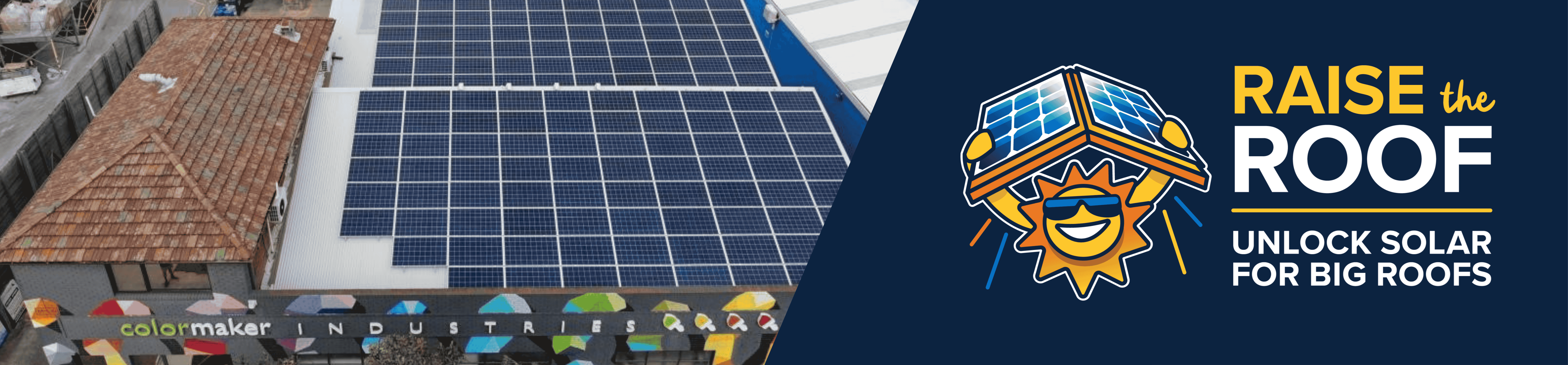
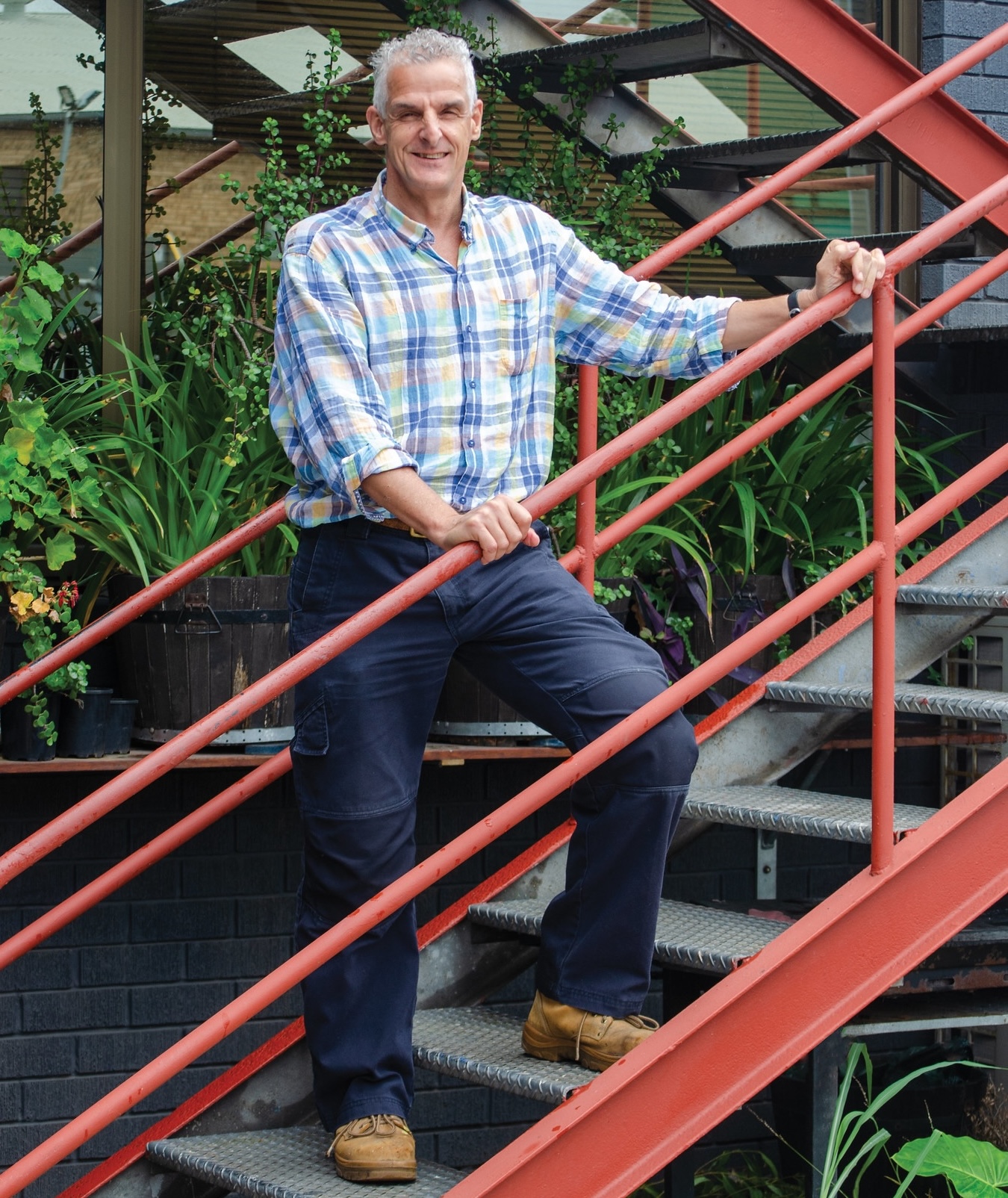
David Stuart, Managing Director of Colormaker Industries is a shining example of how the commercial and industrial sector can lead on clean energy solutions. The Sydney factory runs entirely on renewable energy, powered by a 100 kW solar array and backed by a custom-built battery.
The excess solar energy produced on-site is stored in the factory’s battery where it can be used in the evenings, or sold back into the grid, ready to be shared with neighbouring homes including rental properties and apartments.
More government support and stronger standards are required to better enable more businesses like David's to play a role in supporting the community with clean energy production.
Urban Renewable Energy Zones - Creating Energy Self-Sufficient Cities and Towns
How do we make our cities and towns more energy self-sufficient, and drive down electricity bills and carbon emissions?
Solar Citizens supports the establishment of Urban Renewable Energy Zone (UREZ) - to repower our cities and towns
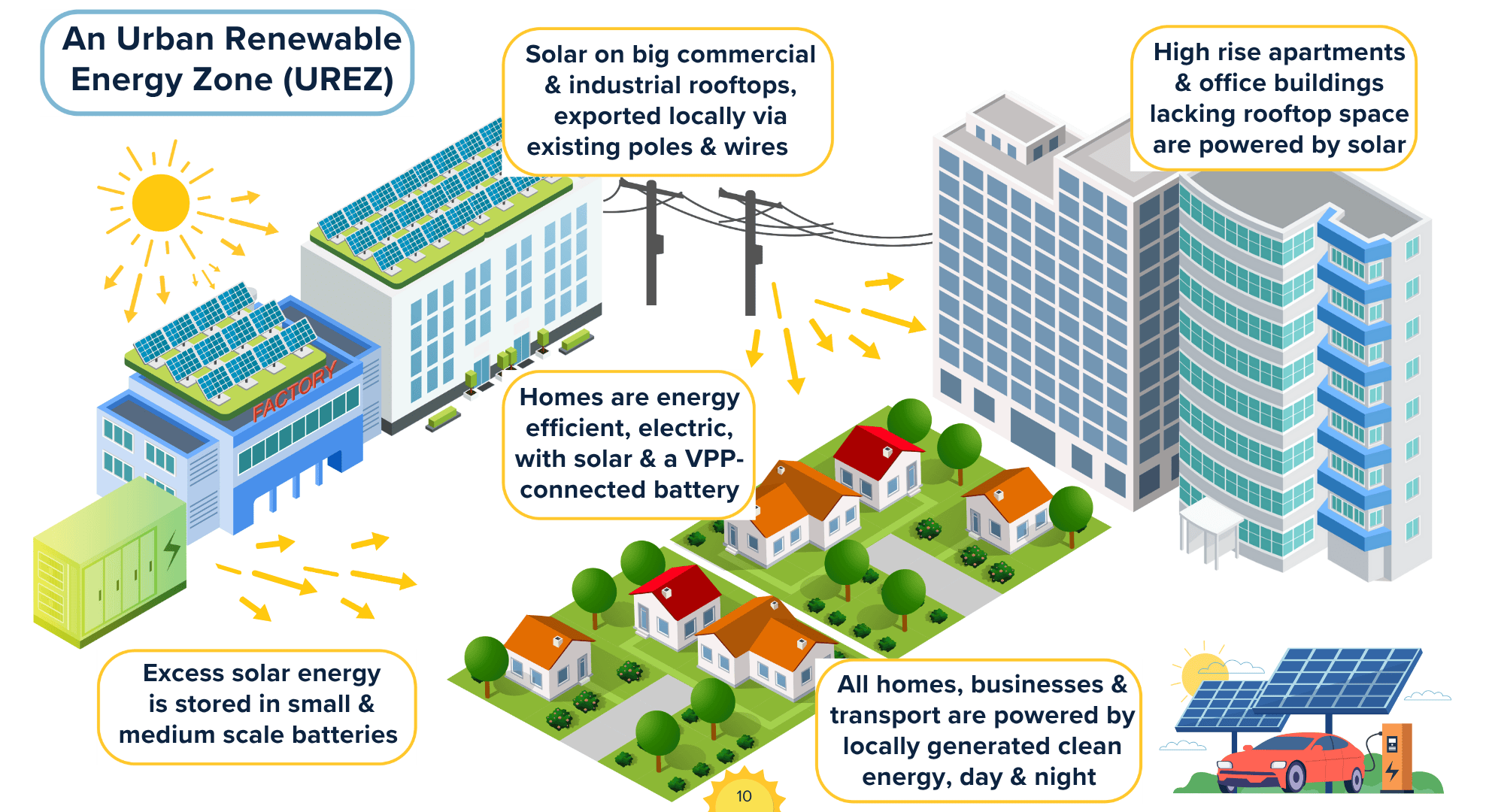
A UREZ (Urban Renewable Energy Zone) turns cities into engines of the clean-energy revolution— connecting homes, big roofs, and shared batteries into a clean-energy ecosystem where solar rooftops, batteries, and smart technologies work together to decarbonise urban areas, strengthen the grid, and return the benefits to communities.
Some building types like high-rise residential apartments and offices can only meet 5% of their energy needs through rooftop solar. But Commercial and Industrial (C&I) buildings such as warehouses and factories have potential to meet 500% - 1000% of their energy needs with rooftop solar.
Incentivising upsizing solar and battery systems on large urban and suburban C&I buildings will help to create more clean energy supply within the local energy network which can then be shared with other households including high-rise buildings, where the lack of roof space is a limiting factor.
Strong coordination is required from governments to ensure that UREZ projects are set up to be fair, transparent and consumer-centric, with a key outcome being reduced energy bills for local homes and businesses.