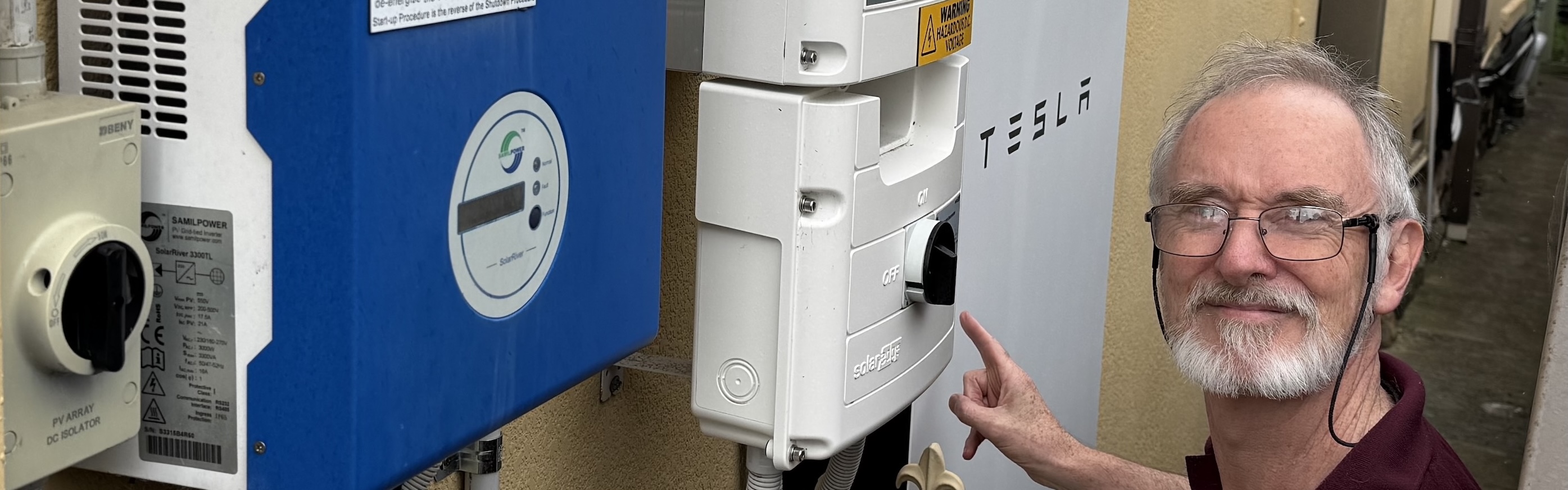
With the Cheaper Home Batteries Program driving a surge in demand for home batteries - many people have questions and we do our best to answer some of those key questions.
Home Batteries FAQ
Why is the Cheaper Home Batteries program a game changer for our energy system?
The Federal Cheaper Home Batteries program offers a ~30% discount* for behind-the-meter batteries from 5 to 50kWh.
* This is an average estimate. Discounts may be higher or lower than 30% depending on the size of the system and other factors.
The Cheaper Home Batteries program will make batteries much more affordable for millions of solar households.
Homes with both solar on the roof and a battery behind the meter will play a significant role in ‘firming’ the grid during peak demand periods, as well as during the middle of the day when the sun is shining.
Currently there are about 250,000 homes with both solar and a battery, but modelling from the Australian Energy Market Operator (AEMO) shows that about one million batteries will be needed by 2030 as we transition away from coal-fired power, and will also reduce the need for expensive gas. This federal rebate will be a game changer in driving uptake to meet one million installations in the five years between 2025 and 2030.
How much can I save?
The answer to this question depends on your household’s energy profile - how much you use and when; where you live and how much rooftop solar you have or want to get.
If you enter these details into the Solar Analytics Solar Maximiser calculator or the SunSPOT Solar and Battery Calculator, either of these will offer you some advice on optimising your energy management system and the potential savings you can make.
Meanwhile, the team at Solar Quotes have crunched the numbers and the good news is that, in Adelaide, Brisbane, Perth and Sydney, the annual savings are likely to be over $1,000 and the payback period is likely to be around 6-8 years.
Our analysis Calculating Home Savings Under the Cheaper Home Batteries Program found that a 4-person household in Sydney or Adelaide can save around $5000 on the cost of a 10Kw battery, and can save up to $14,000 in energy costs over the 10year (warrantied) lifetime of the battery. For more details see our report -
Household batteries are expected to last 10-15 years (we don’t really know yet!) and so the deal is a sweet one in these locations. You might want to proceed more cautiously in Melbourne, Canberra and Hobart where the payback period may be more than 10 years even with the federal rebate.
You can read more about the hip pocket benefits of home batteries at It's (Home Battery) Payback Time and. Are Solar Batteries Worth It? It Depends...
How much battery storage should I get?
That will vary from household to household. The best question to ask yourself is, what do I want my battery storage to achieve? For most of us, the answer to that question will be “to lower my energy bills”.
The peak period for energy demand - when you will pay most for your grid electricity - runs in most states from 4.00 pm - 9.00 pm.
If you are installing a battery to lower your energy bill, your first aim should be to cover your electricity demand during those hours for most of the year. As a rule of thumb, that might require enough storage to cover about one third of your average daily use.
You might decide to get a bigger battery system than you need knowing you only have access to the Cheaper Home Battery rebate once and the very best subsidy rate is right now! The more battery storage you have the better you are covered for those cloudy and rainy days when your solar production shrinks.
If you are looking to ‘right size’ your home energy system, you might like to start your investigations by trying out the SunSPOT Solar and Battery Calculator, an easy to use and free to all, online energy calculator funded by the Australian Government. It will ask you about your existing energy consumption to consider what combination of solar and battery storage will work best for you.
For more information visit Solar Quotes - How Many Batteries Do You Need?
Can I add my battery to an existing solar system?
Batteries can be added to an existing solar system but there are some things to watch out for.
First of all, is your existing array generating enough spare solar power to fill a battery for you?
Secondly, you may need a new AC coupled or hybrid inverter to match your battery (DC storage) with your existing solar.
Thirdly, for liability reasons, your battery installer may be unwilling to hook up their equipment to an older system they have had no responsibility for. They would probably prefer to install a new solar PV system parallel to your existing system or to replace your existing panels altogether. If your solar array is relatively new, go back to your installer and get a quote from them first before considering other installers. To be eligible for the battery rebate you do need to have some solar panels installed at your property.
More information: The Truth About 'Battery Ready' Solar Systems
Can You Add A Battery To Your Existing Solar? Here's How To Tell
Will my household battery give me back up power?
Batteries can serve multiple functions - storage (we love that); ‘firming’ to continue your independent energy supply when a cloud floats over your solar panels; blackout protection for when there’s a short term interruption to your grid supply and full off grid capability allowing your solar to keep generating and your battery to keep storing for however long it takes for grid power (if you connect to the grid) to come back on.
If the battery you are interested in states it can give you ’uninterruptible power supply’ (UPS); ’back-up power’ or ‘blackout protection’, it may not actually give you full off grid capability - so check with your installer. These batteries may not keep your inverter working so your solar won’t be able to refill the battery once you have drained it.
If you want full off grid capability, then look out for options such as ‘standalone’, ‘islandable’, or ‘offgrid capable’ batteries and check you will be getting all the equipment to make sure your installation will be able to function off grid. Always check with your installer. As Finn Peacock from Solar Quotes wisely advises, if they tell you your system will be off grid capable be sure to “get it in writing”.
With the right choice of inverter and /or gateway, household storage systems made by Sungrow, Sigenenergy and BYD can all be set up to function fully off grid. Tesla Powerwall 3 batteries are designed to be grid connected and can no longer be installed in off grid systems.
Are household batteries safe?
Most household batteries are lithium-ion batteries. Lithium-ion batteries have high performance, long lifetimes and low maintenance needs.
Leading brands include built-in safeguards that prevent overheating, overcharging, and electrical faults. When choosing a home battery be sure to look only at reputable battery products certified according to recognised safety standards and be sure to deal with an installer licensed by the Clean Energy Council to ensure a safe installation. Cheaper or lower quality batteries may not be designed to withstand Australia’s extreme weather conditions. You can check out installers’ own ‘best brands’ rankings here.
It's rare for household batteries to cause fires. The vast majority of lithium-ion battery incidents involve smaller consumer electronics like e-bikes and smartphones. The only exception is in relation to LG home batteries. These were recalled in 2023 due to their fire risk. If you have an older battery and are concerned about its brand, you should contact LG Energy Solution Australia (LG). Further information is available at the Product Safety Australia website.
Further information on battery safety:
Are Solar Batteries Safe? - Solar Answered
Solar Battery Safety in Australia: Essential Guide for Homeowners
How can I avoid phony installers?
Even with the federal rebate, buying a home energy system costs real money so make sure you do your homework and are confident with the decisions you make.
When picking an installer, be sure to get at least three quotes from Clean Energy Council (CEC) licensed installers. Battery installers must be specifically accredited for battery installations. Look at your installers’ online reviews and check how long they have been in the business.
Another consideration is whether they are prepared to visit your property and give tailored advice to meet your needs? When they do visit, ask plenty of questions - especially about any special concerns or requirements you are looking for (like off grid capability) and the brands they rely on. All batteries must be listed on the Clean Energy Council-approved product list and so must new inverters.
When picking brands, you can find helpful advice at Solar Quotes on the best home batteries, the best solar panels and reputable installers in your area including customer reviews.
Further tips and advice: Dos and Don’ts of Buying Solar.
Best Solar Installers Australia | Compare Quotes from Local Experts | SolarQuotes
What is a VPP and should I join one?
To be eligible for the Cheaper Home Batteries Rebate the battery purchased must be able to be connected to a Virtual Power Plant or VPP (but is not required to be part of a VPP). The NSW government has withdrawn their battery rebate, but has increased the financial incentive to join a VPP.
A virtual power plant (VPP) is a network of distributed energy resources – including rooftop solar, home batteries, electric vehicles and smart appliances – all virtually linked and orchestrated together so that they can act together like one big battery.
A battery is VPP capable if the inverter:
- can connect to the electricity grid and external entities (directly or indirectly), and
- can communicate and respond through remote signals, and
- has the communications protocol to allow the battery to receive and respond to signals by external entities.
Done right, VPPs can help democratise our energy system. They can turn homes into active participants in the grid, bring down bills, and share the benefits of clean energy with renters, apartment dwellers, and social housing tenants.
Most VPPs are run by large electricity retailers and there are concerns around lack of fairness, control and equity in financial return for consumers.
Ideally households should be able to:
- Understand exactly how and when their batteries are controlled;
- Retain the right to override VPP decisions;
- See a clear, fair return on their investment.
Currently the most consumer-friendly VPP available is run by Amber Electric. With their SmartShift program, households retain full control over their batteries and keep 100% of the revenue they generate—minus a flat monthly fee. Consumers can opt in or out at any time and see in real-time how their energy is being used. It’s a consumer-first approach that builds trust and participation.
The Smart Energy Council says VPP design should be:
- Transparent – clear about how they make money, and who gets what slice.
- Accountable – to the people whose assets and trust they rely on.
- Consumer-centred – not an afterthought or compliance checkbox.
Further reading:
- Solar Quotes - VPP comparison table
- Hamilton-Locke VPPs - Five things you need to know July 2024
- IEEFA - What is the State of Virtual Power Plants in Australia? March 2022
- Renew Economy Why VPPs are the future of electricity retailing - Gabrielle Kuiper, March 2025
- NSW Climate and Energy - Connect your battery to a Virtual Power Plant