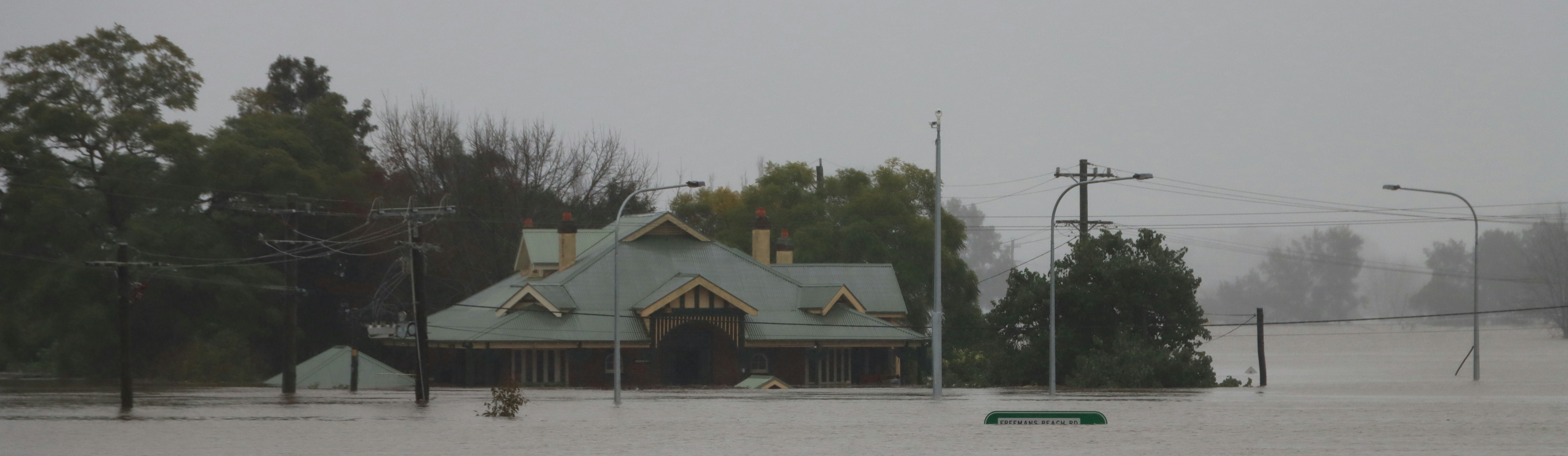
Replacing burning fossil fuels for electricity, and building more energy efficient homes and retrofitting existing homes, are both crucial to helping Australians reduce future climate change and adapt to growing climate change impacts, says Solar Citizens.
Photos by Wes Warren c/- Unsplash
Heidi Lee Douglas, Solar Citizens CEO said:
“The release of the National Climate Risk Assessment (NCRA) paints a very grim picture of the rising risks Australia faces: higher temperatures, worsening heatwaves, more frequent drought, flooding, and extreme weather events. [1]
The Australian government needs to set ambitious climate targets in its Nationally Determined Contributions; back this in with tangible implementation of policies that rapidly replace carbon emitting fossil fuels; and assist Australians to make their home climate as safe as possible for the climate impacts it's now tragically too late to prevent.
Replace fossil fuels
We know rooftop solar backed by storage is great for cost of living and climate, so we are asking the Federal government to double down on this success by pledging to double rooftop solar back by storage by 2035.
The federal government needs to lead by locking in a policy to enable renters to get solar, and unlock solar and storage on commercial and industrial rooftops to share cheap clean energy with people living in high rise apartments in urban renewable energy zones.
Make climate safe homes for all
“We also need all homes to be climate safe, and that means homes we can affordably cool and heat now and into the future.
“Many Australians already live in homes that are difficult and expensive to heat or cool, and with the predicted 3 degrees in mean temperature rise by the end of this century, we urgently need stronger building codes and energy efficiency measures to keep people safe and comfortable in their own homes. Otherwise this report predicts devastating 4.5 times higher mortality rates during heat waves for instance.”
Solar Citizens is calling on the Federal, State, and Territory governments to fast track Minimum Energy Performance Standards for rental properties, and to ensure all homes—including new builds, social housing, rental properties and apartments—are resilient to rising temperatures and extreme events.
“The National Adaptation Plan (NAP) is a step in the right direction, outlining the Commonwealth Government’s plan to include climate resilience as a specific objective within future installments of the National Construction Code, taking into account current and future climatic scenarios. [2]
“The Plan also contains a commitment from the Commonwealth to consider minimum energy performance standards in rental properties, and to investigate integrating climate resilience into existing energy performance programs and building rating schemes–such as NatHERS.
“The Federal Government has been promising minimum energy performance standards for rental properties since 2018–but we are still waiting.” Ms Douglas said. [3]
“Solar Citizens is calling on Federal and State Governments to take immediate action to implement:
- Minimum Energy Efficiency/ Performance Standards for all homes, including rentals.
- Mandatory disclosure of a home’s energy rating at point of sale or lease.
- Support for all homes–including rental properties and vulnerable households–to access energy efficiency upgrades including insulation, double-glazing, electric appliances, rooftop solar, and batteries.”
Leading States Show the Way, But Rapid National Action Is Needed
- In Victoria, Minimum Energy Efficiency Standards (MEES) for rental properties will take effect from March 2027. [4]
- In NSW, the government is trialling voluntary disclosure of energy ratings and developing a new nationwide rating tool — a positive step that could underpin Minimum Energy Performance Standards (MEPS) across Australia. [5]
- The Nationwide House Energy Rating Scheme (NatHERS) will soon allow owners — including landlords — to measure a property’s thermal performance, energy use, and greenhouse emissions, providing a framework to drive household resilience. [6]
“These are good initiatives,” Ms Douglas said, “but without strong national leadership and urgent action, millions of Australians — especially renters and vulnerable households — will continue to be left behind.”
“The National Climate Risk Assessment (NCRA) paints a grim picture of the ever increasing risk of rising temperatures and more frequent extreme weather events such as heat waves, drought and flooding.”
“With many people living in homes that are difficult and expensive to heat or cool, it’s more important than ever to ensure we introduce measures to keep people safe in their own homes from these severe impacts”.
Adopt the Updated National Construction Code
Solar Citizens also welcomes energy efficiency improvements in the 2025 National Construction Code but warns against further delays:
“The next crucial step is for all states and territories to adopt the new energy efficiency standards as soon as possible and resist any attempt to roll back progress,” Ms Douglas said.
“We look forward to supporting the development of future installments of the National Construction Code which will focus on ensuring the climate resilience of new homes under a range of potential warming scenarios.”
Further background
“The National Adaptation Plan (NAP) is a step in the right direction towards formulating a real plan to prepare communities to cope with the negative impacts of climate change.
“It seems the Federal Government recognises the risks and what is required to tackle them, but now needs to go further and actually commit to the solutions we need, as soon as possible.
“What’s missing is a nationwide policy to ensuring higher energy efficiency standards in all homes including rental properties. Homes with insulation, double-glazing and efficient heating and cooling are more resilient to extreme weather events. And those with rooftop solar, battery storage, and efficient electric appliances can keep the lights on during black-outs, and are more affordable to heat and cool.
“Solar Citizens is urging all governments to commit to implementing energy efficiency standards for rental properties, and mandatory disclosure of a home’s rating at the point of sale or lease.
“It’s heartening to see that in Victoria, Minimum Energy Efficiency standards (MEES) for rentals will come into effect from March 2027. However stronger leadership is needed from the Commonwealth to ensure that all states and territories adopt minimum standards and mandatory disclosure as soon as possible.
“The NSW Government has been tasked with developing a new rating tool for existing homes which could provide a nationwide framework to implement Minimum Energy Performance Standards (MEPS), and the Minns government is currently trialling voluntary disclosure with plans to transition to a mandatory scheme at some stage.
“The development of a Nationwide House Energy Rating Scheme (NatHERS) will allow owners–including landlords–to measure their home’s thermal efficiency, appliance energy efficiency, home energy use and greenhouse gas emissions. It’s a welcome tool to measure and develop household resilience and adaptation to climate change, especially for renters and vulnerable Australians.
“There are effective measures in the latest update to the National Construction Code, especially for improving energy efficiency in apartment buildings. The 2025 version of the code has been subject to delays, but the Federal Government recently confirmed that it will be released. The next crucial step once it’s released is for all states and territories to adopt the new energy efficiency standards as soon as possible - and avoid rolling back standards implemented under previous codes.”
NOTES
[1] National Climate Risk Assessment, Department of Climate Change, Energy, Environment & Water (DCCEEW)
[2] National Adaptation Plan, DCCEEW
[3] The Finkel Review (2017) and the Independent Review into the National Energy Market both pushed for rental standards. In response, the Turnbull Government’s National Energy Productivity Plan (NEPP) work program included scoping minimum standards for rental properties. This was the first real federal-level commitment to explore them. In 2019, the national “trajectory for low energy buildings,” explicitly included exploring rental minimum standards.
[4] Minimum Energy Efficiency Standards, Victoria Consumer Affairs
[5] Minimum Energy Performance Standards, review DCCEEW
[6] Nationwide Housing Energy Rating Scheme (NaTHERS), DCCEEW