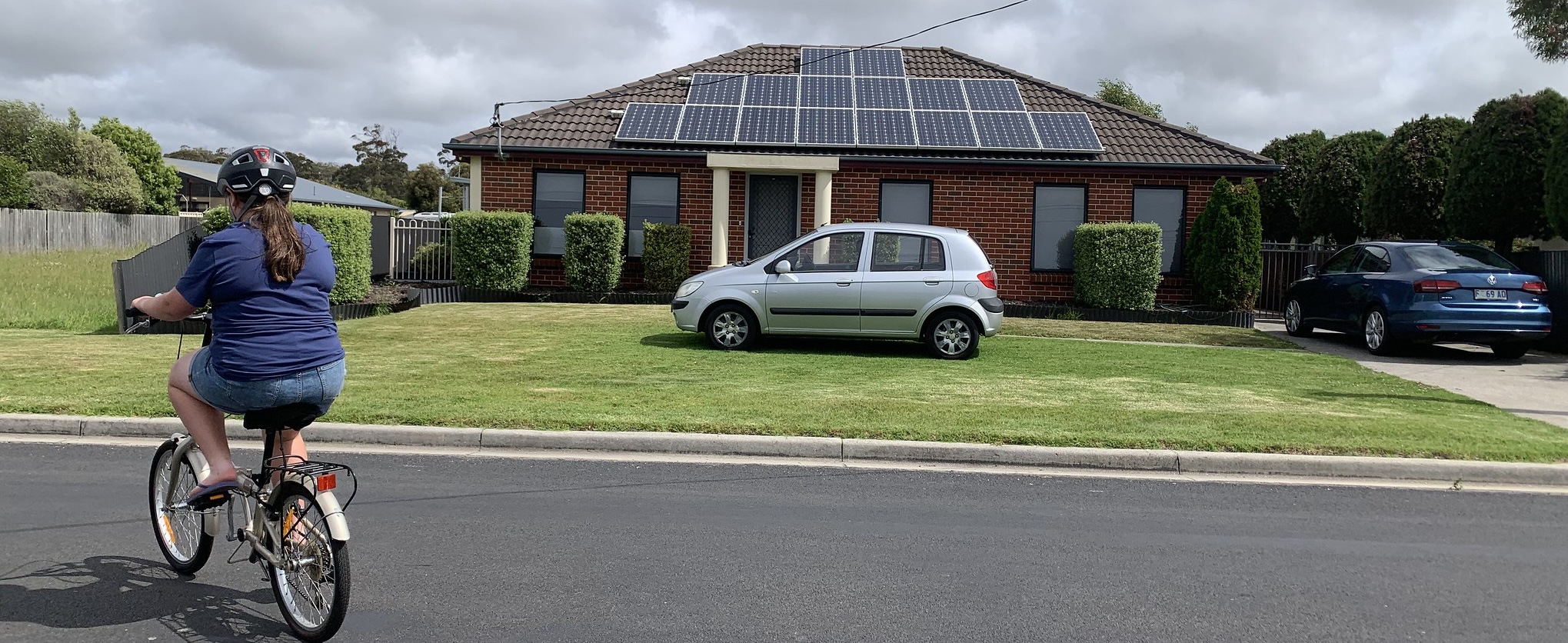
Australia’s energy system has changed — dramatically. We are well under way in our shift to a modern, smart distributed energy system - a third of Australian homes now generate their own power from rooftop solar. [1] Thousands more are installing home batteries every week. And these are primarily in the mortgage belt and regional areas. [2]
Families, retirees and communities are doing their part to make smart investments that cut bills, plus reduce emissions.
So when the Australian Energy Market Commission (AEMC) released its Draft Electricity Pricing Review late last year, many people expected reforms that would support this consumer-driven clean energy future. [3]
Instead, one recommendation in particular has raised serious alarm bells.
Recommendation 5 would pave the way for higher fixed network charges — the unavoidable daily fees we all pay for poles and wires — especially if we have made efforts to cut our electricity use or installed solar and batteries.
What does Recommendation 5 actually propose?
The AEMC is proposing recovering poles and wires network costs through higher fixed daily charges and less through per-kilowatt-hour charges.
In practice, that means:
- higher unavoidable daily charges for everyone
- lower usage charges
-
electricity bills that change very little, no matter how much energy you save or generate
The AEMC frames this as “fairer cost sharing”. But when you look closely, the impacts tell a very different story.
Who loses if fixed charges go up?
Higher fixed charges hit hardest the people who already use the least electricity or have invested their own money or gone into debt to adopt rooftop solar and batteries.
This is a big group, and includes:
- energy-efficient homes
- low-income households
- renters and apartment residents
- retirees and single-person households
-
solar and battery households
We asked Solar Citizens supporters what impact increasing fixed charges would have. Many of you shared your concerns:
Peter a NSW solar and battery owner told us:
“I've just invested thousands of dollars in upgrading my rooftop solar and getting a battery because of the new government incentive of the battery discount. All my calculations on what I could afford and the payback on my investment are based on the current electricity pricing. It’s contradictory and unfair for a government regulator to change the ground rules now.”

Victorian solar owner Robin summed it up for many:
“The fixed charge is by far my largest cost element and increasing it will discourage further investments in home energy efficiency projects.”
Where is the data from the AEMC on how raising fixed charges will impact households and energy consumers as a whole?
Independent modelling by Green Energy Markets shows that raising fixed charges would have dire consequences for most consumers' energy bills.”
-
a household with solar and a battery could be $400–$700 worse off every year
-
low-income households could pay $100 to $200 more per year
Help us stop unfair Fixed Network Charge increases
Why this undermines fairness — not improves it
Fixed charges don’t just raise bills. They flatten incentives.
When a large part of your electricity bill becomes unavoidable:
- saving energy doesn’t pay off
- installing rooftop solar delivers smaller returns
-
investing in batteries makes less sense
Canberra solar owner Gregory explained:
“If fixed charges go up, a large part of our bill will become unavoidable no matter how little energy we use or how much solar we generate. This will undermine the whole logic of why households invest in solar in the first place.”
For pensioners and people on fixed incomes, the stakes are even higher. Jane, an aged care pensioner in NSW, told us:
“I chose to spend a considerable amount of my superannuation funds on investing in solar panels to both reduce my living expenses in future & help with Australia's shift to renewable energy transition… This impacts my standard of living and ability to warm & cool my house which is becoming more important for my health as I age. It also makes me. This change will act as a deterrent to more households obtaining solar panels and leaves me insure whether to buy a small battery like I have been considering.”
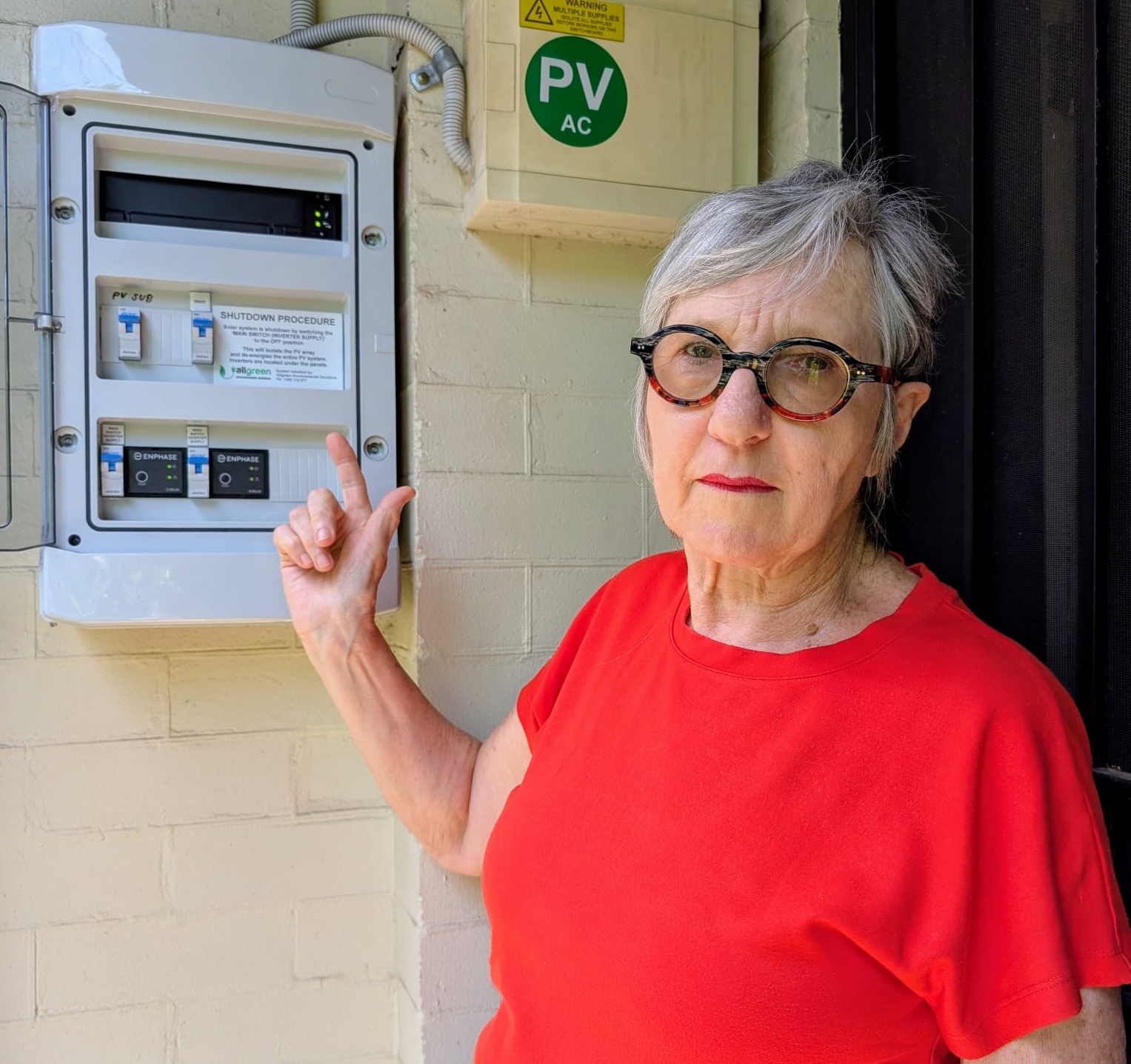
This is the opposite of a consumer-centred energy system.
Who really benefits from higher fixed charges?
While households lose flexibility and control, network service providers - the businesses that own and operate the local poles and wires that connect homes and businesses to the grid - gain something very valuable: reduced risk and more stable revenues.
These network service providers are regulated monopolies, they don’t face competition, and consumers can’t choose another provider. Increasing fixed charges protects these companies from changes in consumer behaviour even when those changes are lowering system costs.
That’s why many experts warn this approach risks locking in ‘business-as-usual’ spending on poles and wires, instead of forcing networks to adapt to a future powered by rooftop solar, batteries and electric vehicles.
As energy expert Stephanie Bashir has said, increasing fixed network charges is an “outrageous” backwards step — one that disincentivises innovation at exactly the wrong time. [4]
Australia’s energy system has already changed
Households have invested more than $25 billion of their own money in rooftop solar. They now contribute over 14% of Australia’s electricity supply — double what they did just five years ago.
This isn’t a fringe activity. It’s the backbone of our clean energy transition.
Yet Recommendation 5 treats these households not as partners, but as a problem to be managed.
When your bill barely changes no matter how much energy you save or generate, why change your behaviour or invest thousands in solar and batteries?
The AEMC is consulting on these recommendations now. This is a crucial moment.
Because once fixed charges go up, they’re very hard to bring back down — and the cost will be borne by households who can least afford it.
Write a submission to the Electricity Pricing Review before it closes at 5pm on Friday 13 February.
Tell the AEMC increasing Fixed Network Charges is unfair
NOTES
1] Household solar electricity generation in the Australian national accounts (2025). ABS
2] 200,000 bill-busting batteries installed in just 6 months, Media Release, Chris Bowen 17/1/26
3] Draft Pricing Review (2025) AEMC, pg 36-38
Recommendation 5: “Amend the rules to focus network tariff design on efficiency, supporting a lowest-cost grid and a fairer sharing of costs among consumers.”
Under this recommendation the AEMC expects “the fixed charge will recover more of each network’s revenue requirement than it does today” and that “dynamic charges will be zero most of the time.”
4] Energy market rule-maker wants to… hike fixed network charges RenewEconomy 11/12/25